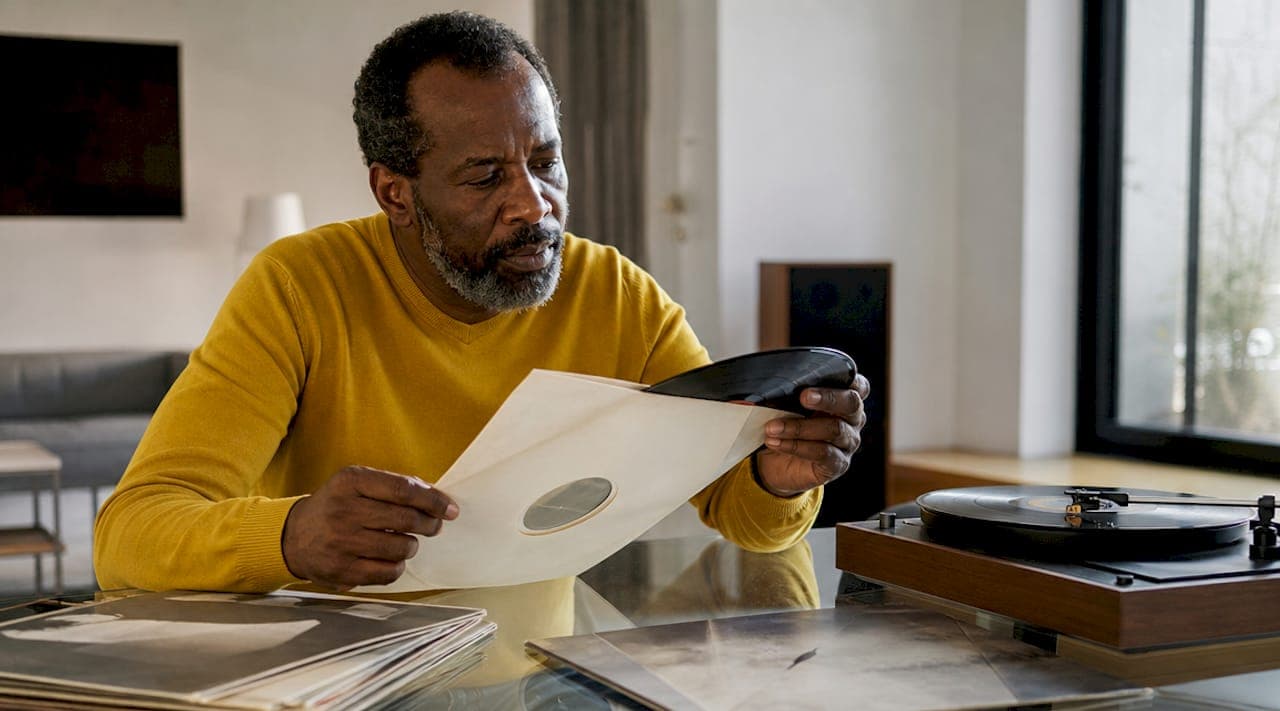
A record's value is defined by three factors: pressing identity, condition, and collector demand. Knowing how to assess all three is the difference between selling a $5 record and a $500 one. Most collectors assume age or artist fame drives price, but rarity combined with condition and demand is what truly moves the needle. The industry term for this process is vinyl record appraisal, and it follows a clear methodology. This guide walks you through every step, from reading the dead wax to checking real sold prices, so you can answer the question "how do i know if my records are worth money" with confidence.
How do I know if my records are worth money?
The first thing to accept is that most records are not worth much. Mass-produced vintage records in standard condition typically sell for $1–$20. That is not a knock on your collection. It is just the reality of how many copies were pressed and how many survived. The records that command real money are specific pressings in exceptional condition that collectors actively want. Your job is to figure out which category yours fall into.

The three-part framework for vinyl record appraisal is pressing identity, condition grade, and verified market demand. Skip any one of these and your valuation will be wrong. A Near Mint copy of a common reissue is still a common reissue. A first pressing in Poor condition has lost most of its premium. All three factors must align for a record to reach its ceiling price.
How to identify the exact pressing of your vinyl record
Pressing identification is the foundation of any accurate valuation. Two copies of the same album can look identical on the shelf and differ by hundreds of dollars in value. The difference lives in the details.
Reading the dead wax
The dead wax is the silent groove area between the last track and the label. Etched or stamped into this space are matrix numbers, sometimes called run-out numbers. These codes identify which lacquer was cut, at which plant, and in which sequence. First pressings often carry matrix numbers ending in -1, A-1, or B-1, indicating the earliest lacquer cuts made from the original master. A matrix ending in -2 or -3 signals a later cut, which usually means a later and less valuable pressing.
Use a flashlight and hold the record at an angle to read these numbers clearly. Write them down exactly as they appear, including any letters, slashes, or handwritten additions. Even a single character difference can separate a common reissue from a sought-after original.
Catalog numbers and label variations
The label on the record face carries its own set of clues. Catalog numbers, label design, and even the font used on early pressings changed over time. An original UK Decca pressing of a Rolling Stones album looks different from a later repress, and collectors know exactly what to look for. Original labels often have specific color schemes, logo placements, and text layouts that were retired or altered in later runs.
- Check the label color and logo style against known first pressing references
- Note whether the label says "Manufactured by" or "Distributed by," as this signals pressing origin
- Look at the sleeve for country of manufacture and any catalog suffix codes (like "E" for stereo or "M" for mono)
- Cross-reference your findings on Discogs pressing data, which catalogs millions of verified pressing variants
Pro Tip: Photograph the dead wax, both labels, and the sleeve spine before you do anything else. These images are your evidence when listing or selling, and they save you from disputes later.
How condition affects vinyl record value
Condition is the single biggest price variable in vinyl record appraisal. The Goldmine grading scale is the recognized industry standard, running from Mint (M) at the top through Near Mint (NM), Very Good Plus (VG+), Very Good (VG), Good (G), and Poor (P) at the bottom.
What the grades actually mean in dollars
The price gap between grades is not gradual. It is steep. A record worth $1,000 in Near Mint condition may fetch only $250 in VG+ and around $100 in VG. That is a 90% drop in value across just two grade steps. Near Mint copies represent only a small fraction of surviving inventory for most vintage titles, which is exactly why they command such premiums.
| Goldmine Grade | Description | Relative Value |
|---|---|---|
| Near Mint (NM) | No visible marks; plays perfectly | Full market price |
| Very Good Plus (VG+) | Light surface marks; minimal noise | 25–50% of NM price |
| Very Good (VG) | Visible marks; audible noise | 10–25% of NM price |
| Good (G) | Heavy wear; significant noise | 5–10% of NM price |
| Poor (P) | Severely damaged; barely playable | Negligible value |
Grading the sleeve separately
Goldmine standards require grading vinyl and sleeve separately, and sleeve condition can account for up to 50% of a record's total value. A Near Mint record in a split-seam, water-damaged sleeve is not a Near Mint package. Collectors who want the complete artifact will discount heavily for sleeve damage. Check for ring wear, seam splits, writing, price stickers, and any moisture damage.
The most common mistake collectors make is overgrading. A single deep scratch can drop value by 80–90% compared to a clean Near Mint copy. Grade conservatively. Buyers who receive a record better than described become repeat customers. Buyers who receive a record worse than described leave negative feedback and return it.
Pro Tip: Play the record under a bright light before grading. Surface marks invisible to the naked eye become obvious when light hits the grooves at an angle. What looks like VG+ can reveal itself as VG once you actually listen.
How to find real sale prices for your records
Asking prices are not sale prices. This distinction is the most important concept in determining realistic record worth. A seller can list any number they want. What a buyer actually paid is the only number that matters.
Here is how to find verified sale data:
- Go to Discogs and find your exact pressing. Use the matrix numbers and label details you identified earlier to locate the specific variant. Discogs lists every pressing separately, so do not just search the album title.
- Filter by condition. Once you find your pressing, click "Last Sold" and filter the sales history by the condition grade closest to yours. This gives you a realistic price range for your specific copy.
- Check eBay completed listings. Search the album title plus pressing details, then filter results to show only completed and sold listings. Unsold listings prove nothing about value.
- Use Popsike for high-end validation. Discogs shows market rates for common collectibles; Popsike reflects competitive auction prices for rare pieces. If your record is genuinely scarce, Popsike auction archives reveal what motivated buyers actually paid at peak competition.
- Cross-reference at least three recent sales. One sale is an outlier. Three sales in the same condition establish a pattern. Use the median of those three as your baseline value.
Avoid using the median price across all conditions on a single listing page. That number mixes NM copies with VG copies and tells you nothing useful. Always filter by condition before drawing any conclusions about what your record is worth.
What makes vinyl records valuable beyond pressing and condition
Rarity and demand work together. Rarity alone does not create value if nobody wants the record. A limited pressing of an obscure regional artist may be genuinely rare but attract almost no collector interest. The records that reach serious prices combine genuine scarcity with active demand.
Several factors drive that demand:
- Genre. Early jazz, soul, funk, and regional punk consistently command higher prices than equally rare records in other genres. Collector communities in these genres are large, passionate, and willing to pay. Early electronic and library music have also surged in collector interest over the past decade.
- Artist significance. Records by artists with deep cultural footprints attract more buyers. A first pressing by a foundational artist in any genre will always find a market.
- Promotional copies. Promo copies pressed for radio stations or press use often predate commercial releases and carry distinct labels. They are frequently rarer than retail copies and prized by serious collectors.
- Complete packages. Original inserts, lyric sheets, posters, and inner sleeves add measurable value. A record sold without its original inner sleeve loses part of its collectible appeal, especially for jazz and classical titles where the liner notes are part of the experience.
- Age alone. Age does not determine value. Millions of copies of popular albums from the 1960s and 1970s were pressed, and most survive in common grades. Age is only relevant when it coincides with scarcity and demand.
The Vinylatlas insights section tracks where collector culture is most active globally, which gives you a useful read on which genres and markets are heating up.
Practical steps to appraise your records accurately
Accurate appraisal requires discipline. Emotional attachment to a record does not translate into market value, and the collectors buying your records have none of your sentiment.
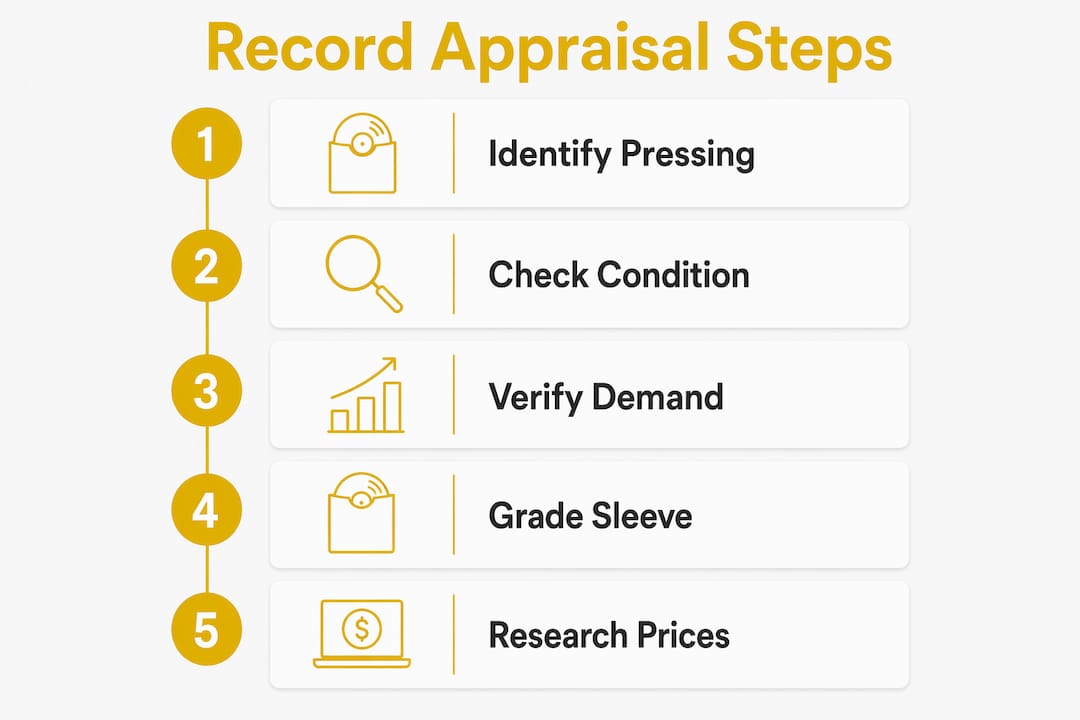
- Identify the exact pressing first. Do not look up prices until you know which pressing you have. Valuing the wrong variant is a waste of time.
- Grade conservatively. If you are torn between two grades, choose the lower one. Buyers grade harshly. Your VG+ is often their VG.
- Use sold prices only. Asking prices on any platform are aspirational. Sold prices are factual.
- Photograph everything. Clear photos of the dead wax, both labels, the sleeve front and back, and any damage protect you and build buyer confidence.
- Consider professional appraisal for large or rare collections. Expert appraisals provide precision beyond what online price guides can offer, especially for genuinely rare or unique items. Auction houses that specialize in records offer this service and can also facilitate sales.
- Watch for counterfeits. High-value pressings attract fakes. Bootleg copies of sought-after records exist, and matrix numbers on counterfeits are sometimes copied from originals. Cross-reference pressing details with multiple verified sources before assigning a high value.
- Bundle common records. Low-value records sell faster and for better combined returns when grouped by genre or era. A lot of 20 soul 45s moves more efficiently than 20 individual $2 listings.
Pro Tip: When selling through local record stores, bring your pressing research with you. Stores that specialize in buying and selling vinyl will respect a seller who knows what they have. It also protects you from lowball offers on genuinely valuable copies.
Key takeaways
A record's worth is determined by pressing identity, condition grade, and verified sold prices. All three must be assessed together for an accurate valuation.
| Point | Details |
|---|---|
| Pressing identity comes first | Read dead wax matrix numbers and label variants before checking any prices. |
| Condition drives price more than anything | A Near Mint copy can be worth 10–20x more than the same record in Very Good condition. |
| Use sold prices, not asking prices | Filter completed sales on Discogs and eBay by condition to find real market value. |
| Genre and demand matter as much as rarity | Jazz, soul, funk, and regional punk consistently command higher collector prices. |
| Grade conservatively and document everything | Overgrading costs you buyer trust; clear photos of labels and dead wax protect both parties. |
The uncomfortable truth about record valuation
Most people who ask whether their records are worth money are hoping for a different answer than the one the market gives them. I have seen collectors sit across from me with a crate of records they inherited or bought decades ago, convinced that age and fame have made them rich. The hard truth is that the vast majority of those records are worth $5 or less, not because they are bad records, but because millions of copies exist and condition is rarely what people think it is.
The collectors who do well are the ones who approach valuation like a researcher, not a fan. They read the dead wax before they read the tracklist. They grade the sleeve as harshly as the vinyl. They check three sold prices, not the highest listing they can find. And they stay flexible on price because the market moves. A genre that was cold two years ago can heat up fast when the right artist gets reappraised or a documentary drops.
What I find most interesting is how pressing identification has become its own skill set within the hobby. Knowing that a matrix ending in A-1 on a specific label color is worth ten times a later pressing of the same album is the kind of knowledge that takes time to build. But it is also the knowledge that separates a digger who sells smart from one who leaves money on the table. Patience and research are the actual tools here. The grooves just hold the music.
— M
Where to find stores that know their vinyl
Knowing your record's value is one thing. Finding the right place to sell, trade, or get a second opinion is another.

Vinylatlas maps record stores, listening bars, and record fairs across every major city worldwide. Whether you are looking for a specialist shop that buys collections, a store with deep genre knowledge, or just a trusted place to get an honest appraisal, the Vinylatlas store directory puts them all in one place. Stores like Tvinyl in Barcelona carry the kind of specialized inventory and expertise that makes them worth visiting whether you are buying, selling, or just getting a read on what your collection is worth. When you know what you have, Vinylatlas helps you find the right people to deal with.
FAQ
What records are worth the most money?
First pressings in Near Mint condition from high-demand genres like jazz, soul, funk, and regional punk command the highest prices. Promotional copies and records with original inserts also reach premium values.
How do I find the pressing information on my record?
Look at the dead wax, the silent area between the last groove and the label. Matrix numbers etched or stamped there identify the pressing. Cross-reference those numbers with Discogs to find your exact variant.
Are old records automatically valuable?
Age alone does not determine value. Most mass-produced vintage records sell for $1–$20 regardless of age. Rarity, condition, and collector demand are the actual drivers of price.
What is the Goldmine grading scale?
The Goldmine scale is the recognized industry standard for grading vinyl records, running from Mint at the top to Poor at the bottom. It grades vinyl and sleeve separately, and condition differences between grades translate directly into large price differences.
Should I get a professional appraisal for my collection?
Professional appraisals are recommended for large collections or records you believe are genuinely rare. Online price guides are useful for common titles but cannot replace expert judgment on unusual or high-value items.